
Introduction
The freelance economy is undergoing a revolution. A decade ago, freelancing meant hustling between clients, handling invoices manually, and spending endless hours marketing your services. Today, Artificial Intelligence (AI) is reshaping how freelancers work, earn, and grow. The rise of intelligent automation, generative tools, and machine-learning platforms has not only streamlined workflows but also expanded the definition of what it means to be independent.
In 2025 and beyond, freelancers who understand how to collaborate with AI will stand out. Those who resist adaptation risk falling behind as clients increasingly demand speed, accuracy, and innovation. This transformation isn’t about machines replacing humans; it’s about humans who learn to amplify their creativity, productivity, and strategy through AI.
This comprehensive guide explores the future of freelancing in the age of AI—how the landscape is changing, what opportunities and challenges lie ahead, and how platforms like Fiverr are leading the way toward a smarter, tech-driven freelance ecosystem.
1. The Rise of AI-Enhanced Freelancing
AI is no longer confined to corporations and research labs. Freelancers are now using it daily to perform tasks that once required entire teams. From project planning to marketing, AI tools empower individuals to work like micro-enterprises.
For instance, a copywriter can use generative tools like ChatGPT to create drafts in minutes, then refine them using human creativity. Designers can use Midjourney to brainstorm visuals or develop early concepts before moving into Adobe Creative Suite. Developers can rely on GitHub Copilot to debug and accelerate coding.
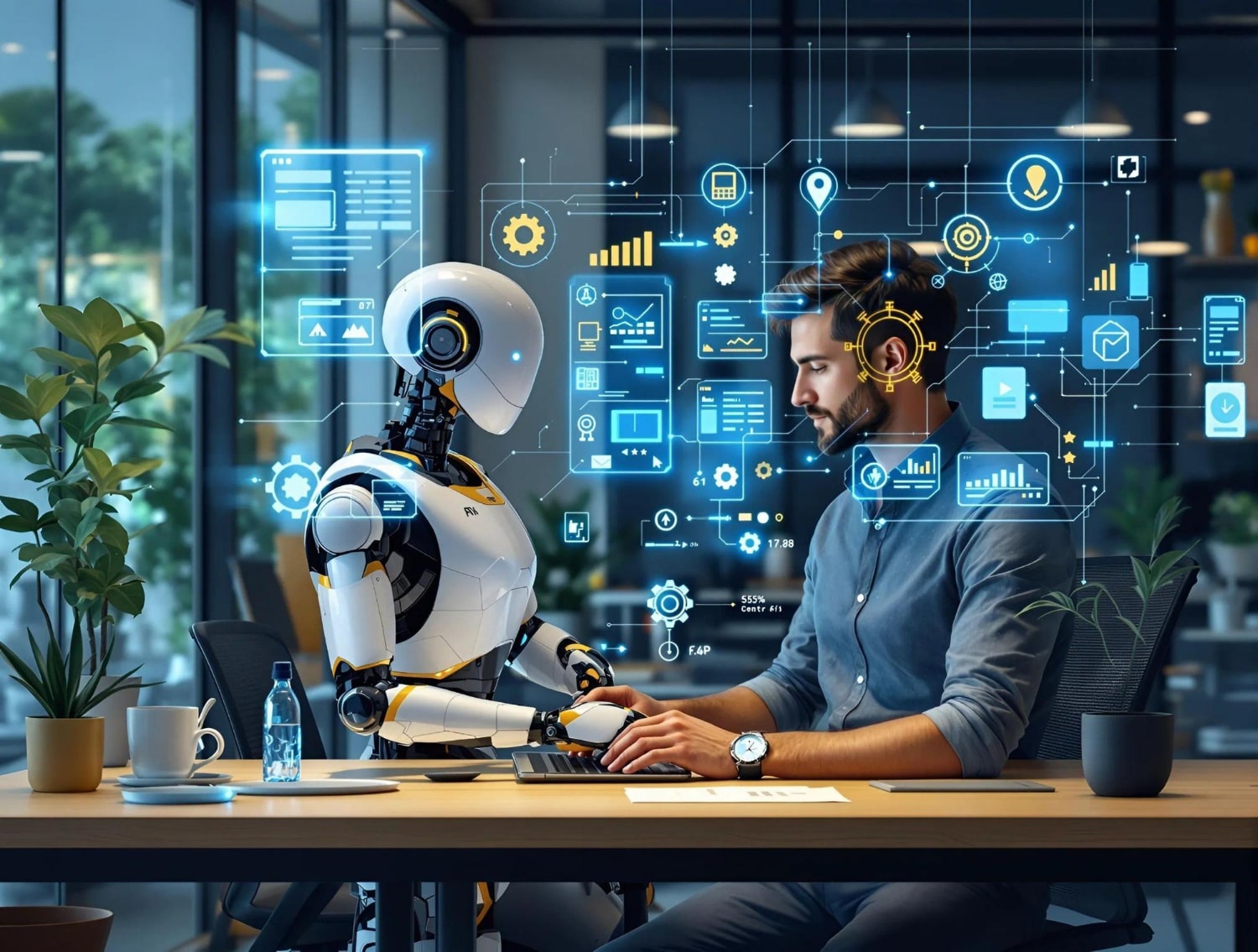
This hybrid model—humans augmented by AI—defines the modern freelance era. Instead of viewing AI as competition, successful freelancers see it as an assistant, researcher, and collaborator.
Platforms such as Fiverr have quickly adapted by offering new service categories like “AI-Assisted Design,” “Chatbot Integration,” and “Machine Learning Model Tuning.” This evolution creates opportunities for freelancers who can merge creativity with technology.
Key takeaway: the future freelancer is not just skilled; they are augmented, efficient, and strategic.
2. How AI Is Changing Client Expectations
AI has made clients smarter and more data-driven. They expect faster results, consistent quality, and measurable impact. Businesses no longer want to wait weeks for deliverables—they want turnaround times measured in hours, not days.
Freelancers must adapt to this accelerated environment. With AI handling repetitive tasks, the focus has shifted toward strategic thinking, originality, and personalization. Clients are no longer impressed by speed alone; they look for insight, tone, and value that align with brand goals.
For example, a company might hire a Fiverr freelancer to build an AI-powered chatbot that understands customer sentiment, not just keywords. Similarly, marketing clients now expect data-backed creative decisions. Freelancers who can use AI analytics to justify design or content choices instantly gain credibility.
AI has also introduced transparency. Clients can use tools to detect plagiarism, analyze SEO quality, or verify ad performance. This accountability pushes freelancers toward excellence and innovation.
Key takeaway: in the AI era, freelancers compete on intelligence and interpretation—not just delivery.
3. Emerging AI-Driven Freelance Opportunities
As AI grows, entirely new freelance roles are appearing. These roles didn’t exist five years ago but now dominate job boards and Fiverr categories.
- AI Prompt Engineer: Experts who craft precise prompts for ChatGPT, Midjourney, and Claude to generate optimal results.
- AI Trainer: Specialists who teach models to recognize industry-specific data or refine language accuracy.
- Automation Consultant: Freelancers who build custom workflows using Zapier, Make, or custom APIs.
- Data Visualization Specialist: Designers combining analytics with storytelling to present AI insights visually.
- Synthetic Media Creator: Professionals generating AI videos, voices, or avatars for marketing and entertainment.
Additionally, traditional fields like copywriting, UI design, or social media management are evolving. Instead of disappearing, they are merging with AI to form hybrid disciplines—AI-powered design, AI-optimized writing, or AI-driven strategy.
Platforms like Fiverr already showcase these transitions, where freelancers market themselves as “AI-enhanced experts” rather than traditional service providers.
4. The Impact of AI on Freelance Pricing and Income
Automation raises a critical question: if AI speeds up production, will freelance income drop? The answer depends on positioning.
Freelancers who price themselves solely by hours risk earning less because AI reduces task duration. However, those who shift toward value-based pricing—charging for results instead of time—will thrive.
For example, a content strategist using AI can produce 10 optimized articles per week instead of three. If those articles generate measurable business growth, clients will pay premium rates for performance rather than labor.
AI also enables freelancers to diversify income streams. Many now sell digital products such as templates, AI prompt packs, and training guides. A single Fiverr seller can design a prompt library once and sell it to hundreds of clients.
Key takeaway: AI reduces effort, not opportunity. The future belongs to freelancers who focus on strategy, value, and outcomes.
5. How Freelancers Can Future-Proof Their Careers
The freelance landscape is evolving faster than ever, but adaptation ensures longevity. Here’s how freelancers can prepare:
1. Learn continuously – AI tools evolve monthly. Subscribe to newsletters, take online courses, and experiment regularly. Fiverr Learn, Coursera, and Udemy now feature dedicated AI skill tracks.
2. Focus on hybrid skills – Combine technical literacy with creativity. A designer who understands generative algorithms or a writer who uses predictive analytics will always stay relevant.
3. Build personal AI workflows – Automate your daily routine. Use ClickUp AI for task summaries, Grammarly for editing, and ChatGPT for research assistance.
4. Offer AI-enhanced services – Position yourself as a forward-thinking professional. Clients increasingly prefer freelancers who integrate automation into their processes.
5. Maintain authenticity – AI should assist, not define, your work. Use it to enhance efficiency but retain your distinct creative style.
Key takeaway: learning, adaptation, and authenticity are the foundation of future freelance success.
6. Ethical and Creative Challenges in AI-Powered Freelancing
AI presents not only opportunities but also ethical dilemmas. Data privacy, originality, and accountability remain serious concerns.
Many freelancers worry about intellectual property. If an AI tool generates part of a design or text, who owns it? Most platforms—including Fiverr—advise transparency: disclose your use of AI tools in contracts and clarify ownership terms with clients.
Another issue is overreliance. Using AI without critical review can lead to generic outputs. Freelancers who rely entirely on automation risk diluting their unique perspective. Creativity still requires human intuition—emotion, humor, and cultural nuance that algorithms cannot replicate.
There’s also the ethical aspect of bias. AI models trained on skewed data may produce discriminatory or inaccurate results. Responsible freelancers should validate AI-generated work and avoid using it blindly.
Key takeaway: the most successful freelancers combine AI efficiency with human judgment and integrity.
7. The Role of Platforms Like Fiverr in the AI Revolution
Fiverr is at the forefront of integrating AI into freelancing. It provides both opportunity and education for freelancers transitioning into the AI-driven marketplace.
The platform’s AI category has exploded, featuring services such as prompt engineering, AI art generation, and data analytics. Fiverr Learn offers short courses on AI productivity tools, helping freelancers stay competitive.
For clients, Fiverr’s AI-powered search algorithm simplifies talent discovery by analyzing skill relevance, ratings, and delivery speed. This means freelancers who use AI efficiently naturally rank higher and attract better clients.
Fiverr also empowers collaboration—connecting freelancers specializing in different AI domains. For instance, a chatbot designer might partner with a copywriter to deliver a full conversational branding package.
Key takeaway: marketplaces like Fiverr are evolving from gig platforms into intelligent ecosystems that nurture future-ready freelancers.
8. Globalization and the New Definition of “Work from Anywhere”
AI enables true geographic freedom. With automation handling repetitive processes and cloud tools connecting workflows, freelancers can now operate efficiently from any corner of the world.
Digital nomads use AI scheduling assistants to manage time zones, translation models to communicate with clients globally, and finance bots to manage multi-currency payments. Fiverr and Payoneer integrations further streamline international transactions.
AI translation and cultural adaptation tools also allow freelancers to expand across markets previously limited by language. For instance, a freelancer in India can seamlessly deliver projects for clients in France, Germany, or Japan using AI-driven localization tools.
Key takeaway: AI eliminates borders, transforming freelancing into a truly global economy.
9. The Human Element: Why Creativity Still Matters
Despite the sophistication of AI, human creativity remains irreplaceable. Algorithms can generate patterns, but they cannot interpret emotion, empathy, or social context.
Freelancers bring something machines lack: perspective. A writer understands tone; a designer perceives cultural symbolism; a consultant recognizes nuance in human behavior. These elements define great work.
AI can assist in ideation but cannot innovate alone. The most in-demand freelancers will use AI for efficiency while injecting personal vision to produce authentic results.
Key takeaway: technology enables efficiency, but creativity sustains demand.
10. The Future Freelance Economy: Predictions for 2025–2030
AI will continue to reshape freelancing, but five key trends stand out for the coming years:
- Rise of Micro-Specialization: Freelancers will focus on narrow niches such as “AI for eCommerce automation” or “AI storytelling design.”
- Hybrid Teams: Small, global teams of freelancers collaborating via AI tools will replace large agencies.
- Subscription-Based Freelancing: Instead of one-time projects, freelancers will offer ongoing AI-powered services for recurring revenue.
- Increased Regulation: Governments will implement clearer rules around data privacy and AI-generated content ownership.
- AI Collaboration Tools: Platforms will integrate real-time brainstorming, translation, and ideation features for seamless team synergy.
Freelancers who anticipate these shifts will not only survive but lead the next wave of digital transformation.
Frequently Asked Questions
Will AI replace freelancers completely?
No. AI handles repetitive, data-driven work but lacks creativity and emotional intelligence. Freelancers who embrace AI will outperform those who ignore it.
How can freelancers use AI ethically?
Always disclose AI usage to clients, verify originality, and ensure compliance with privacy laws. Transparency builds trust and credibility.
What are the most valuable AI skills for freelancers?
Prompt engineering, workflow automation, and data analysis are essential. These skills enhance any existing discipline.
Does AI reduce freelance earnings?
Not if freelancers focus on value and innovation. AI helps increase capacity and efficiency, enabling higher output and income.
How can platforms like Fiverr help freelancers adapt?
Fiverr provides training, AI service categories, and analytics that help freelancers market themselves effectively in a changing landscape.
Should new freelancers learn AI now?
Absolutely. Early adoption ensures a competitive advantage and positions freelancers for emerging opportunities.
Conclusion
Artificial Intelligence is transforming freelancing from a traditional gig model into a dynamic ecosystem of human-machine collaboration. The future freelancer isn’t defined by tasks but by adaptability—the ability to merge creativity with intelligent automation.
AI won’t replace freelancers; it will elevate them. It’s rewriting what productivity means, enabling individuals to serve more clients, produce better work, and live more freely. Platforms like Fiverr are paving this transition, empowering freelancers to stay ahead through education, innovation, and technology integration.
As we move further into 2025 and beyond, success in freelancing will depend on one principle: evolve or fade. The freelancers who embrace AI today will lead tomorrow’s digital revolution.